Browse the Full Catalog
Cybrary’s comprehensive, framework-aligned catalog has been reorganized to provide you with an intentional, guided learning experience. Advance your career, prep for certifications, and build your skills whenever, wherever.

The content and tools you need to build real-world skills
Rapidly develop your skills via an integrated and engaging learning
experience on the Cybrary platform.
Bite-sized Video Training
Manageable instruction from industry experts
Hands-On Learning
Put your skills to the test in virtual labs, challenges, and simulated environments
Practice Exams
Prepare for industry certifications with insider tips and practice exams
Earn Industry Badges
Complete coursework to earn industry-recognized badges via Credly

AI Security Lifecycle
This collection provides insight into every stage of the AI Security Lifecycle, from planning and data preparation to deployment, monitoring, and governance—equipping them with the frameworks, tools, and best practices necessary to safeguard AI models and data in enterprise environments.
AI Fundamentals
Learn the basics of Artificial Intelligence! This skill path is designed to provide you with a general understanding of Artificial Intelligence, and how to deploy and secure it within the enterprise. Upon completing the skill path, you will earn a Credly digital badge that will demonstrate to employers that you’re ready for the job.
AI Scams
In this brief course, you will learn the basics of AI scams. AI scams are cyberattacks that use artificial intelligence to trick people. They create emails, videos, voice messages, or websites that look, sound, and read like the real thing, making them far more convincing and harder to detect than traditional scams.
CompTIA Tech+ (FC0-U71)
CompTIA Tech+ is a beginner-level certification and is perfect for you if you are considering a new career or career change to the IT industry. This certification prep path is designed to provide you with a comprehensive overview of the concepts and skills you will need to pass the certification exam.
Risk Management
Risk Management is the proactive process of identifying, evaluating, and controlling threats that could prevent an organization from achieving its strategic goals or remaining compliant with laws. This skill path is designed to help you make sure the risks your organization does take are calculated and aligned with your governance strategy. Upon completing the skill path, you will earn a Credly digital badge that will demonstrate to employers that you’re ready for the job.
Governance
Governance is the system of rules, practices, and processes used to direct and control a company. This skill path is designed to provide you with a general understanding of how to align business objectives with ethical practices for how a company operates. Upon completing the skill path, you will earn a Credly digital badge that will demonstrate to employers that you’re ready for the job.
Compliance
Compliance is the act of adhering to all relevant laws, regulations, industry standards (external), and internal policies and controls (corporate). This skill path is designed to provide you with a general understanding of how to ensure an organization operates within legal and ethical boundaries to avoid fines, penalties, and reputational damage. Upon completing the skill path, you will earn a Credly digital badge that will demonstrate to employers that you’re ready for the job.

Cybersecurity Leadership
Becoming an effective Cybersecurity Leader requires you to consider traditional Leadership competencies through a security-centric lens. This skill path is designed to provide you with a general understanding of cybersecurity leadership. Upon completing the skill path, you will earn a Credly digital badge that will demonstrate to employers that you’re ready for the job.

Collaborative Leadership
Collaborative Leadership is the skillset required to work effectively with others. This skill path is designed to provide you with a general understanding of the collaborative skills required to be a successful leader. Upon completing the skill path, you will earn a Credly digital badge that will demonstrate to employers that you’re ready for the job.
Career Paths


-p-500%5B1%5D.webp)
Leadership and Management
Effective Leadership and Management is critical to any security-related function. This career path is designed to provide you with the foundational knowledge and key skills required to succeed as an effective leader within any security domain. Upon completing the career path, you will earn a Credly digital badge that will demonstrate to employers that you’re ready for the job.
GRC Analyst
Every successful cybersecurity program requires judicious risk management and informed oversight. This career path is designed to provide you with the foundational knowledge and key skills required to succeed as a GRC Analyst or in any role that involves managing governance, risk, and compliance. Upon completing the career path, you will earn a Credly digital badge that will demonstrate to employers that you’re ready for the job.
Security Awareness Training
Healthcare Industry Best Practices
In this brief course, you will learn about best practices for the healthcare industry. Healthcare organizations are often seen as a high-value target for cyber criminals as they work with highly confidential information. This might seem frightening, but by following cyber security best practices, you can protect your employer.
Secure Credit Card Handling
In this brief course, you will learn the basics of secure credit card handling as part of your required Security Awareness Training. When handling credit cards, it is crucial to adhere to stringent protocols and employ robust security measures to keep credit card information safe and secure.
Critical Infrastructure Best Practices
In this brief course, you will learn about best practices for critical infrastructure as part of your required Security Awareness Training. Critical infrastructure is often targeted by cyber criminals looking to disrupt vital services. By following cyber security best practices, you can help prevent these attacks.
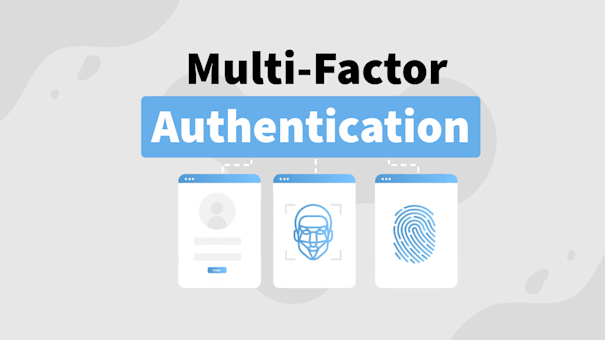
Multi-Factor Authentication
In this brief course, you will learn about the basics of multi-factor authentication as part of your required Security Awareness Training. MFA is a security process in which a user is required to provide two or more authentication factors in order to access a system or service.
POPI Act (South Africa)
In this brief course, you will learn about the basics of South Africa’s Protection of Personal Information Act (POPI Act or POPIA). POPIA ensures organizations collect, use, and store personal data responsibly. It gives individuals more control over their information and sets clear rules for lawful, transparent processing.
Small Business Best Practices
In this brief course, you will learn about best practices for small businesses. Small businesses without full-time IT staff are often targeted by cybercriminals. While this can seem frightening, the good news is that by following cyber security best practices, we can stand tough against cybercrime.
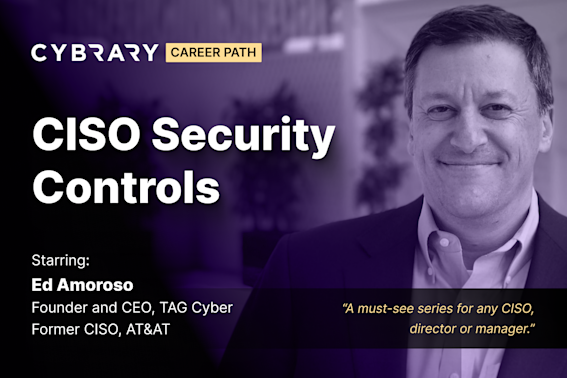
50 CISO Security Controls
The Security Controls are an essential component of the CRISC certification, and provide you with the information you need to ensure that your organization’s cybersecurity infrastructure has the maturity and structure it needs to meet and exceed the demands of a changing market.
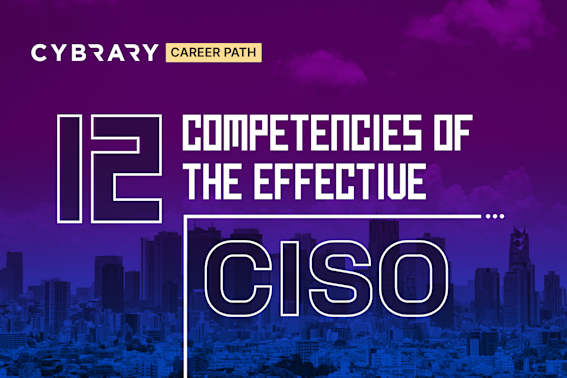
12 Competencies of the Effective CISO
These competencies are also shown to provide an excellent career development and learning roadmap for anyone desiring advancement in the enterprise security management field. Lectures address the twelve insights with invited experts from the field offering their key insights and advice for participants. Learning Objectives Participants will develop the valuable insights and insider knowledge necessary to support (1) optimizing career success and performance in their current enterprise security management or leadership role, and/or (2) increasing their chances of successful promotion to a senior leadership position, including the CISO role, within their present or future organization. Target Participants The course is designed for working practitioners of enterprise security, at all possible stages of career growth, within business or government environments, who are either currently in management and leadership roles, or who aspire to improve their chances of promotion into executive roles, such as CISO. The Competencies: Innovation Finance & Administration Business Operations Cybersecurity Expertise Discretion & Trust Public Speaking Personal Productivity Information Technology Threat Insights Balancing Compliance Risk Orientation Team Leadership and Vision

OWASP Top 10 - A01:2021 - Broken Access Control
OWASP Top 10 - A02:2021 - Cryptographic Failures
OWASP Top 10 - A03:2021 - Injection
OWASP Top 10 - A04:2021 - Insecure Design
OWASP Top 10 - A05:2021 - Security Misconfiguration
OWASP Top 10 - A06:2021 - Vulnerable and Outdated Components
Masquerading and Data Encryption
Once in your environment, adversaries will try to evade your defenses and may rename their code to look like a legitimate executable. They could also encrypt your data with ransomware. Don't let adversaries hold you over a barrel. Get hands-on and learn to detect and mitigate these techniques today.
Practical Threat Modeling
This course provides an in-depth exploration of advanced threat modeling techniques. It covers essential tools like MITRE ATT&CK Navigator and Deciduous, and guides you through developing detailed threat models for complex environments. Learn to visualize attack paths and conduct thorough threat modeling workshops.
Kerberoasting and Domain Accounts
Kerberos enables secure network communication in Windows environments, while Domain Accounts are a core part of Identity and Access Management. Adversaries can attack both of these and move through an environment largely undetected. Start detecting this covert behavior and begin stopping it in its tracks today.
Application Shimming and Data from Local System
Application shimming is a powerful feature that allows for backward compatibility across different versions of Windows OS. Adversaries manipulate this feature to bypass controls. They also search local file systems for files of interest. Get the skills to detect this behavior and prevent adversaries from setting up shop in your organization.

Spearphishing Attachment and PowerShell
Phishing is one of the top techniques leveraged in breaches today, and adversaries use it to send malicious attachments to targeted users. PowerShell is a powerful scripting tool that adversaries can exploit to perform recon and run executables. You will detect these adversary techniques and discover ways to mitigate them.

Remote System Discovery and Remote Desktop Protocol
Adversaries want to understand your environment and will use Remote System Discovery to do so. They can also leverage the same Remote Desktop Protocol (RDP) you'd use to access systems remotely. And, with the right credentials, they can move laterally through your system. Outwit them by detecting and blocking these techniques today.
Foundations of Physical Penetration Testing
While organizations often focus on protecting digital assets, physical vulnerabilities can provide attackers with direct access to sensitive systems, data, and infrastructure. In this course, you'll learn the fundamentals of planning and conducting physical penetration tests, also known as physical pen testing, while discovering how these assessments help organizations uncover vulnerabilities before attackers do.
Masquerading and Data Encryption
Once in your environment, adversaries will try to evade your defenses and may rename their code to look like a legitimate executable. They could also encrypt your data with ransomware. Don't let adversaries hold you over a barrel. Get hands-on and learn to detect and mitigate these techniques today.
AI Security Lifecycle – Monitor
The Monitor phase of the AI Security Lifecycle focuses on ensuring that artificial intelligence systems remain reliable, secure, and compliant once they are deployed in production environments. Continuous monitoring is essential to maintain operational trust, detect emerging risks, and ensure that AI systems behave as expected over time.
AI Security Lifecycle – Release
This course provides a comprehensive and governance-driven exploration of the secure release of AI systems from development and testing environments into production systems. The release phase has evolved into a structured governance checkpoint that ensures AI artifacts are secure, traceable, compliant, and reliable before real-world deployment.
AI Security Lifecycle – Dev and Experiment
The Dev and Experiment phase of the AI Security Lifecycle represents the foundation upon which all secure, trustworthy, and compliant AI systems are built. This course focuses on the security, governance, and risk management controls required during AI development and experimentation, where early decisions have the greatest downstream impact.

CVE Series: Django (CVE-2022-34265)
CVE Series: Follina (CVE-2022-30190)
CVE Series: Confluence RCE (CVE-2022-26134)
CVE Series: Redis (CVE-2022-0543)

CVE Series: Spring4Shell (CVE-2022-22965)
Royal Ransomware Group
Royal is a spin-off group of Conti, which first emerged in January of 2022. The group consists of veterans of the ransomware industry and brings more advanced capabilities and TTPs against their victims. Begin this campaign to learn how to detect and protect against this newer APT group!

Raspberry Robin
Raspberry Robin is a malware family that continues to be manipulated by several different threat groups for their purposes. These threat actors (Clop, LockBit, and Evil Corp) specialize in establishing persistence on a compromised host and creating remote connections to use later. Once established, these C2 connections can be used for multiple purposes, including data exfiltration, espionage, and even further exploitation.
Double Trouble with Double Dragon
Weak Link in the Supply Chain
Ransomware for Financial Gain
Threat actors continue to leverage ransomware to extort victim organizations. What was once a simple scheme to encrypt target data has expanded to include data disclosure and targeting a victim’s clients or suppliers. Understanding the techniques threat actors use in these attacks is vital to having an effective detection and mitigation strategy.


Our Instructors
Industry seasoned. Cybrary trained.
Our instructors are current cybersecurity professionals trained by Cybrary to deliver engaging, consistent, quality content.


Cybrary is just an amazing platform. Literally thousands of hours of quality content. You can find a course or a lab for just about everything, and they are constantly releasing new material. They also have highly responsive customer service. It's been worth every penny.

Greatest investment I have made to dateCybrary is solely responsible for my passing the CompTIA A+ exam and is the reason I am going into my Net+ with confidence. I have learned a great deal through virtual labs, practice tests, recorded lessons, and the various other things they offer. The community is great as well. It is an all around wonderful experience and I rate it as a totally worthwile expense for starting or furthering your career in the IT industry. Invest in yourself.
Training is coolEasy to enroll, instructors are enthusiastic and professionnal, technical stuff is very well explained.
I've been having concerns on how to start in terms of building my #cybercareer with a sustained path. So I got introduced to Cybrary and I was able to enroll and startup early last week and I have gone through two sessions, getting to know Cybrary and also a view of what cybersecurity is from their perspective. That gave me an overall view of what jobs are found in the space, their general responsibilities, required skills, necessary certifications and their average salary pay... Cybrary has given me a greater reason to pursue my hearts desire at all cost.
Thanks to Cybrary I'm now a more complete professional! Everyone in [the] cybersecurity area should consider enrollment in any Cybrary courses.
The interviewer said the certifications and training I had completed on my own time showed that I was a quick learner, and they gave me a job offer.
Our partnership with Cybrary has given us the opportunity to provide world-class training materials at no cost to our clients, thanks to the funding we’ve received from the government. Cybrary offers a proven method for building a more skilled cybersecurity workforce.
All of the knowledge, skills, and abilities gained through the program were essential to me impressing the employer during the interview.
Cybrary is a one-stop-shop for my cybersecurity learning needs. Courses on vulnerability management, threat intelligence, and SIEM solutions were key for my early roles. As I grow into leadership roles influencing business policy, I’m confident Cybrary will continue developing the knowledge and skills I need to succeed.
After tens of minutes, I proudly have achieved my certificate of continuing education for Intro to Infosec... Doing everything I can to avoid retaking the CISSP test! Thanks Cybrary - 1 CPE at a time!
We’ve had six students this summer, all with different schedules, so we’ve been trying to balance their learning experience with some practical work. It’s not like they’re all sitting in a classroom at the same time, so the ability for them to learn at their own pace without any additional support has probably been the biggest benefit of using Cybrary.

Just finished the third out of four MITRE ATT&CK Defender courses on Cybrary... If anyone is interested in learning how to do ATT&CK based SOC assessments I would definitely recommend this course. The best part is that it is FREE!
Excellent new series of courses from Cybrary, each course covers a different CVE, demonstrates vulnerability and its mitigation.

I've successfully completed the career path provided by Cybrary to become a SOC Analyst - Level 2. Eventually, do what you love, and do it well - that's much more meaningful than any metric.
Cybrary is helping me proactively build skills and advance my career. Labs put concepts immediately into practice, reinforcing the content (and saving me time not having to spin up my own VM). Career paths lay everything out clearly, so I know what skills to prioritize.
I got a job as a cybersecurity analyst at Radware with a salary I've never even dreamed about AND with no prior experience.
Thank you to Cybrary for providing this opportunity to complete the Cybrary Orientation Certification program with such sleekness and detail-oriented learning.

So far I have really been enjoying Cybrary's SOC Analyst Training, it has been very informative. I just finished up with the command line section and now I'm on to the more fun stuff (Malware Analysis). I think it's so dope that platforms like this exist. This is a game changer.
I decided to check out Cybrary and the courses they had to offer after seeing a few posts from people who had completed their courses. I'm happy to say that their instructors are knowledgeable and clear, and their course catalogues are extensive and offer relevant career path courses.
Glad to have discovered Cybrary they are such a great tool to use to help diversify your knowledge through lessons, assessments and practices. All compact[ed] into highly detailed and informative chunks of information. Feeling very content with the results.

Well, it took a long time, yet I struggled hard to complete the course "Become a SOC Analyst - Level 2" by Cybrary. Cybrary is the best platform that I have ever come across. Tons of virtual labs, great in-depth insights from the experts, and the best career path/learning modules.
I am currently working in a restaurant and going to school full time. But it is not stopping me from working on gaining more and more skills. I have already spent more than 30 hours on Become a SOC Analyst level 1 [with] Cybrary and still have 67 hours to go.