


.svg)









Risk Management Basics
In this course, you will be introduced to the basics of risk management. You will learn about roles and responsibilities, the risk management lifecycle, as well as how to measure and communicate risk.

H
33
M
Time
Beginner
difficulty
ceu/cpe
Course Content
Course Description
Upon completing this course, you should be able to:
- Define cybersecurity risk using likelihood, impact, and uncertainty to support consistent business decision-making
- Differentiate risk, threat, and vulnerability to improve risk identification and executive communication
- Distinguish inherent risk from residual risk and apply risk appetite and tolerance to guide risk decisions
- Identify key sources and categories of cybersecurity risk, including operational, supply chain, privacy, disaster recovery, and AI-related risks
- Explain core risk management roles and governance responsibilities across security, compliance, audit, operations, and leadership
- Apply the risk management lifecycle (identify, assess, mitigate, monitor) using common frameworks and structured documentation practices
- Measure and communicate risk effectively using scoring models, dashboards, and risk acceptance documentation aligned to business objectives
Provider

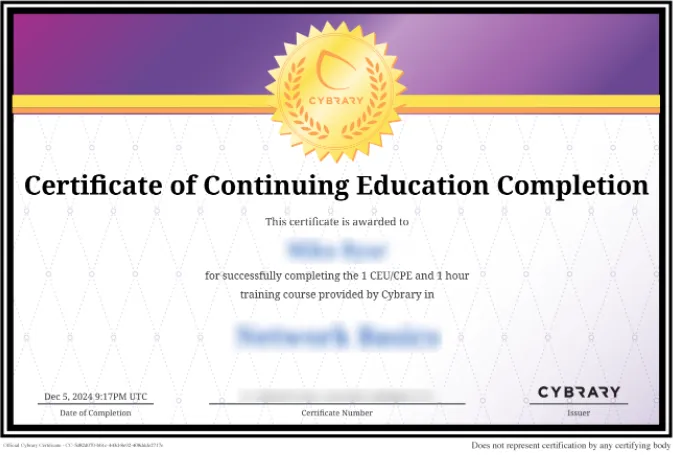
Certificate of Completion


