COURSE

Application of the MITRE ATT&CK Framework

Course

This MITRE ATT&CK training is designed to teach students how to apply the matrix to help mitigate current threats. Students will move through the 12 core areas of the framework to develop a thorough understanding of various access ATT&CK vectors.

Full access included with 
Insider Pro
 and 
Teams

8

H

29

M
Time

beginner

i
Designed for learners who have no prior work experience in IT or Cybersecurity, but are interested in starting a career in this exciting field.
Designed for learners with prior cybersecurity work experience who are interested in advancing their career or expanding their skillset.
Designed for learners with a solid grasp of foundational IT and cybersecurity concepts who are interested in pursuing an entry-level security role.
Experience Level

10437

Enrollees

960

XP

10

i

Earn qualifying credits for certification renewal with completion certificates provided for submission.
CEU's

Learners at 96% of Fortune 1000 companies trust Cybrary

About this course

Read More

Skills you'll gain

Course Outline

1
Module 1: Course Introduction
0
H
28
Min
1
Module 2: Initial Access
1
H
21
Min
1
Module 3: Execution
1
H
12
Min
1
Module 4: Persistence
1
H
7
Min
1
Module 5: Privilege Escalation
1
H
5
Min
1
Module 6: Defense Evasion
0
H
48
Min
1
Module 7: Credential Access
0
H
26
Min
1
Module 8: Discovery
0
H
23
Min
1
Module 9: Lateral Movement
0
H
27
Min
1
Module 10: Collection
0
H
22
Min
1
Module 11: Command and Control
0
H
17
Min
1
Module 12: Exfiltration
0
H
16
Min
1
Module 13: Impact
0
H
11
Min
1
Module 14: Conclusion
0
H
2
Min

1.1 Course Overview

Free

10 XP

0H

3m

1.2 What is the MITRE ATT&CK Framework?

Free

10 XP

0H

6m

1.3 Where is the MITRE ATT&CK Framework Being Used?

Free

10 XP

0H

10m

13.1 What is Impact?

Free

10 XP

0H

10m

11.1 What is Command Control?

Free

10 XP

0H

1m

12.1 What is Exfiltration?

Free

10 XP

0H

1m

10.1 What is Collection?

Free

10 XP

0H

1m

9.1 What is Lateral Movement?

Free

10 XP

0H

1m

8.1 What is Discovery?

Free

10 XP

0H

1m

7.1 What is Credential Access?

Free

10 XP

0H

1m

6.1 What is Defense Evasion?

Free

10 XP

0H

2m

5.1 What is Privilege Escalation?

Free

10 XP

0H

2m

4.1 What is Persistence?

Free

2 XP

0H

10m

3.1 What is Execution?

Free

2 XP

0H

10m

4.2 Accessibility Features

Free

10 XP

0H

10m

4.3 Bootkit

Free

10 XP

0H

8m

4.4 Browser Extension

Free

10 XP

0H

9m

6.2 Clear Command History

Free

10 XP

0H

6m

7.2 Bash History

Free

10 XP

0H

4m

8.2 Account Discovery

Free

10 XP

0H

5m

9.2 Application Deployment Software

Free

10 XP

0H

5m

Audio Capture

Free

10 XP

0H

4m

11.2 Commonly Used Port

Free

10 XP

0H

3m

Automated Exfiltration Copy

Free

XP

0H

4m

13.2 Account Access Removal

Free

10 XP

0H

3m

13.3 Defacement

Free

10 XP

0H

2m

12.2 Automated Exfiltration

Free

10 XP

0H

4m

11.3 Custom Command and Control Protocol

Free

10 XP

0H

3m

10.3 Clipboard Data

Free

10 XP

0H

7m

8.3 Browser Bookmark Discovery

Free

10 XP

0H

7m

7.3 Brute Forces

Free

10 XP

0H

6m

6.3 Compile After Delivery

Free

10 XP

0H

7m

5.2 Access Token Manipulation

Free

10 XP

0H

7m

4.5 Component Firmware

Free

10 XP

0H

8m

12.3 Data Compressed

Free

10 XP

0H

3m

13.4 Impact Case Study

Free

10 XP

0H

4m

11.4 Uncommonly Used Ports

Free

10 XP

0H

4m

12.4 Data Transfer Size/Limits

Free

10 XP

0H

3m

10.4 Data from Local System

Free

10 XP

0H

3m

9.3 Exploitation of Remote Services

Free

10 XP

0H

7m

8.4 System Owner/User Discovery

Free

10 XP

0H

3m

7.4 Credential Dumping

Free

10 XP

0H

4m

6.4 Disabling Security Tools

Free

10 XP

0H

4m

4.6 Create Account

Free

9 XP

0H

10m

3.2 Command Line Interface

Free

10 XP

0H

10m

1.4 Navigation and Review

Free

10 XP

0H

9m

2.1 What is Initial Access?

Free

10 XP

0H

4m

2.2 External Remote Services

Free

10 XP

0H

11m

2.3 Spearphishing Link

Free

10 XP

0H

10m

2.4 Supply Chain Compromise Part 1

Free

10 XP

0H

6m

2.5 Supply Chain Compromise Part 2

Free

10 XP

0H

6m

2.6 Trusted Relationship

Free

10 XP

0H

13m

2.7 Valid Accounts Part 1

Free

10 XP

0H

8m

2.8 Valid Accounts Part 2

Free

10 XP

0H

7m

2.9 Initial Access Case Study

Free

10 XP

0H

5m

2.10 Module 2 Summary

Free

10 XP

0H

5m

9.4 SSH Hijacking

Free

10 XP

0H

4m

13.5 Module 13 Summary

Free

10 XP

0H

1m

11.5 Command and Control Case Study

Free

10 XP

0H

2m

10.5 Collection Case Study

Free

10 XP

0H

4m

9.5 Lateral Movement Case Study

Free

10 XP

0H

7m

8.5 Discovery Case Study

Free

10 XP

0H

4m

7.5 Steal Web Session Cookie

Free

10 XP

0H

4m

6.5 Hidden Files and Directories

Free

10 XP

0H

5m

5.3 Elevation Escalation with Prompt

Free

10 XP

0H

5m

4.7 Hooking

Free

10 XP

0H

3m

3.3 Execution Through API

Free

6 XP

0H

10m

14.1 Course Summary

Free

10 XP

0H

2m

12.5 Exfiltration Case Study

Free

10 XP

0H

3m

11.6 Module 11 Summary

Free

10 XP

0H

1m

10.6 Module 10 Summary

Free

10 XP

0H

1m

9.6 Module 9 Summary

Free

10 XP

0H

1m

8.6 Module 8 Summary

Free

10 XP

0H

1m

7.6 Credential Access Case Study

Free

10 XP

0H

3m

6.6 Hidden Users

Free

10 XP

0H

3m

5.4 Exploitation for Privilege Escalation

Free

10 XP

0H

9m

4.8 New Service

Free

10 XP

0H

7m

3.4 Control Panel Items

Free

10 XP

0H

10m

Module 12 Summary

Free

10 XP

0H

1m

7.7 Module 7 Summary

Free

10 XP

0H

1m

6.7 Process Hollowing

Free

10 XP

0H

5m

5.5 File System Permission Weakness

Free

10 XP

0H

6m

3.5 Powershell

Free

10 XP

0H

9m

4.9 Persistence Case Study

Free

1 XP

0H

5m

6.8 Software Packing

Free

10 XP

0H

5m

4.10 Module 4 Summary

Free

10 XP

0H

2m

6.9 Defense Evasion Case Study

Free

10 XP

0H

6m

5.6 Scheduled Task

Free

10 XP

0H

7m

3.6 Scripting

Free

10 XP

0H

10m

3.7 User Execution

Free

10 XP

0H

10m

3.8 Execution Case Study

Free

10 XP

0H

7m

3.9 Module 3 Summary

Free

10 XP

0H

5m

5.7 Sudo

Free

10 XP

0H

6m

5.8 Web Shell

Free

10 XP

0H

9m

5.9 Privilege Escalation Case Study

Free

10 XP

0H

8m

5.10 Module 5 Summary

Free

10 XP

0H

2m

6.1What is Defense Evasion??

Free

10 XP

0H

2m

6.10 Module 6 Summary

Free

10 XP

0H

2m

2.5 Supply Chain Compromise Part 2

6m

Module 2: Initial Access
2.6 Trusted Relationship

13m

Module 2: Initial Access
2.7 Valid Accounts Part 1

8m

Module 2: Initial Access
2.8 Valid Accounts Part 2

7m

Module 2: Initial Access
2.9 Initial Access Case Study

5m

Module 2: Initial Access
2.10 Module 2 Summary

5m

Module 2: Initial Access
9.4 SSH Hijacking

4m

Module 9: Lateral Movement
13.5 Module 13 Summary

1m

Module 13: Impact
11.5 Command and Control Case Study

2m

Module 11: Command and Control
10.5 Collection Case Study

4m

Module 10: Collection
9.5 Lateral Movement Case Study

7m

Module 9: Lateral Movement
8.5 Discovery Case Study

4m

Module 8: Discovery
7.5 Steal Web Session Cookie

4m

Module 7: Credential Access
6.5 Hidden Files and Directories

5m

Module 6: Defense Evasion
5.3 Elevation Escalation with Prompt

5m

Module 5: Privilege Escalation
4.7 Hooking

3m

Module 4: Persistence
3.3 Execution Through API

10m

Module 3: Execution
14.1 Course Summary

2m

Module 14: Conclusion
12.5 Exfiltration Case Study

3m

Module 12: Exfiltration
11.6 Module 11 Summary

1m

Module 11: Command and Control
10.6 Module 10 Summary

1m

Module 10: Collection
9.6 Module 9 Summary

1m

Module 9: Lateral Movement
8.6 Module 8 Summary

1m

Module 8: Discovery
7.6 Credential Access Case Study

3m

Module 7: Credential Access
6.6 Hidden Users

3m

Module 6: Defense Evasion
Course Description

In this course we will move through the 14 areas of the MITRE Attack Framework and discuss how security professionals should use the matrix to assist them in overlaying solutions or controls to address current threats.

The MITRE Attack Framework is a globally accessible knowledge base of tactics and techniques provided from real-world observations. Using the attack framework, a security consultant or blue team member can formulate a strategy for reducing risk in both the public and private sectors.

Since the methods of attack change regularly, this course is going to focus on examples for several of the attack types in each section and applicable mitigation tactics. These principles can then be applied across the entire framework whether you are looking at adding a security solution to your current stack or are doing research on known attack vectors for academic purposes.

Prerequisites

  • Basic cyber defense technical terminology understanding
  • Basic terminology in association with controls
  • Basic terminology in association with risk reduction
  • Course Goals

    By the end of the course, students should be able to understand how to defend against the adversarial tactics of:

  • Reconnaissance
  • Resource Development
  • Initial Access
  • Execution
  • Persistence
  • Privilege Escalation
  • Defense Evasion
  • Credential Access
  • Discovery
  • Lateral Movement
  • Collection
  • Command and Control
  • Exfiltration
  • Impact
  • What is the MITRE ATT&CK Framework?

    MITRE ATT&CK was created as a model used to document and track a variety of different techniques that attackers use during the phases of a cyberattack to break into an organization’s network and obtain sensitive data.

    ATT&CK is an acronym for Adversarial Tactics, Techniques, and Common Knowledge. Essentially, the framework is a matrix of those techniques sorted by different tactics. It includes different matrices for Windows, Mac, LINUX, and mobile systems. The framework is used by various IT professionals including red teamers, threat hunters, and defenders to help classify attacks and assess a company’s risk.

    MITRE ATT&CK was launched in 2013 and has since become one of the most respected and used resources in cybersecurity. It’s an essential tool for professionals in the IT industry to be familiar with ATT&CK.

    What is Involved in the MITRE ATT&CK Training?

    In this application of the MITRE ATTACK Training Course, students will learn how to use the framework to reduce security risks to their organizations. The course will focus on breaking down several types of attacks and learning methods and tactics to mitigate those threats. The current framework of ATT&CK includes 12 tactics, each of which has numerous techniques.

    When completed with this course, students will have the skills to understand primary access ATT&CK vectors, including:

  • Spear Phishing Link
  • Drive-by Compromise
  • Supply Chain Compromise
  • Trusted Relationship
  • Students who enroll in this MITRE ATTACK training should have an understanding of basic technical terminology, basic terminology in association with controls, and basic terminology in association with risk reduction. There are no other requirements for this beginner level course.

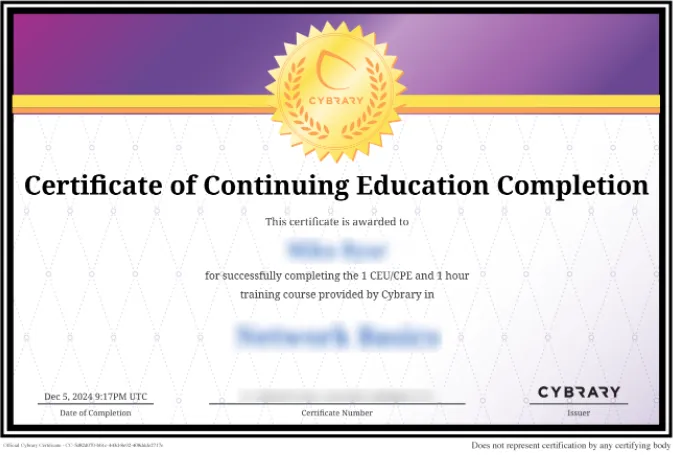
    In this course, students will earn 10 CEU/CPE and will receive a Mitre Att&ck Certificate of Completion when finished with the class.

    How is the MITRE ATT&CK Framework Used?

    The MITRE ATT&CK framework, a staple of the security community, works by organizing the steps that cyber attackers take to infiltrate networks, compromise hosts, escalate privileges, move without detection, and ultimately, obtain important data. Cybersecurity teams can better test, develop, and prioritize their current means of detection and response to be relevant to their organizations’ business, industry, and intellectual property.

    Why Is Understanding the MITRE ATT&CK Framework Important in IT?

    MITRE ATT&CK is a framework that has been around for a number of years, but it’s fairly recently that it’s become a universal tool. It’s important in the IT industry because it’s very effective at helping organizations, government agencies, and end users share cyberthreat intelligence. Of course, there are other means through which intelligence like this is shared, what sets ATT&CK apart is that it uses a common language that is standardized and accessible worldwide.

    Another benefit of using the ATT&CK framework is that it allows defenders and analysts to work together with information to compare and contrast different threat groups. Analysts are able to structure intelligence based on behavior ad defenders can structure information based on behavior. Together they are able to detect and mitigate threats.

    Additionally, users are able to understand adversaries and how they operate on a deeper level – the steps that they will use to infiltrate networks and obtain the data they are after. This means that defenders don’t necessarily have to focus only on defensive tactics, but also have to have a good understanding of how the offense is working. That will allow cybersecurity professionals to better defend their networks and systems.

    What Is the Best Way to Learn about MITRE ATT&CK Framework?

    The MITRE ATT&CK framework is an important and widely used tool for cybersecurity professionals. It’s a means for sharing intelligence with the goal of reducing the risk of cyberattacks for organizations. Learning about the ATT&CK framework is essential for IT and cybersecurity professionals to stay up to date in their industry and ahead of the bad guys.

    It’s best to learn about MITRE ATTACK from experts who use it, like Cybrary’s excellent instructors. All of the courses in our extensive library are self-paced, making them convenient for all students. If you’re interested in learning more about the MITRE ATT&CK framework, enrolling in our Application of the MITRE ATTACK Framework training is a great place to start. Enrolling is easy, just click the Register button at the top right of this screen to get started.

    Train Your Team

    Cybrary’s expert-led cybersecurity courses help your team remediate skill gaps and get up-to-date on certifications. Utilize Cybrary to stay ahead of emerging threats and provide team members with clarity on how to learn, grow, and advance their careers within your organization.

    Included in a Path

    No items found.
    No items found.

    Instructors

    Robert Smith
    Director of Security Services at Corsica
    Read Full Bio
    Learn

    Learn core concepts and get hands-on with key skills.

    Practice

    Exercise your problem-solving and creative thinking skills with security-centric puzzles

    Prove

    Assess your knowledge and skills to identify areas for improvement and measure your growth

    Get Hands-on Learning

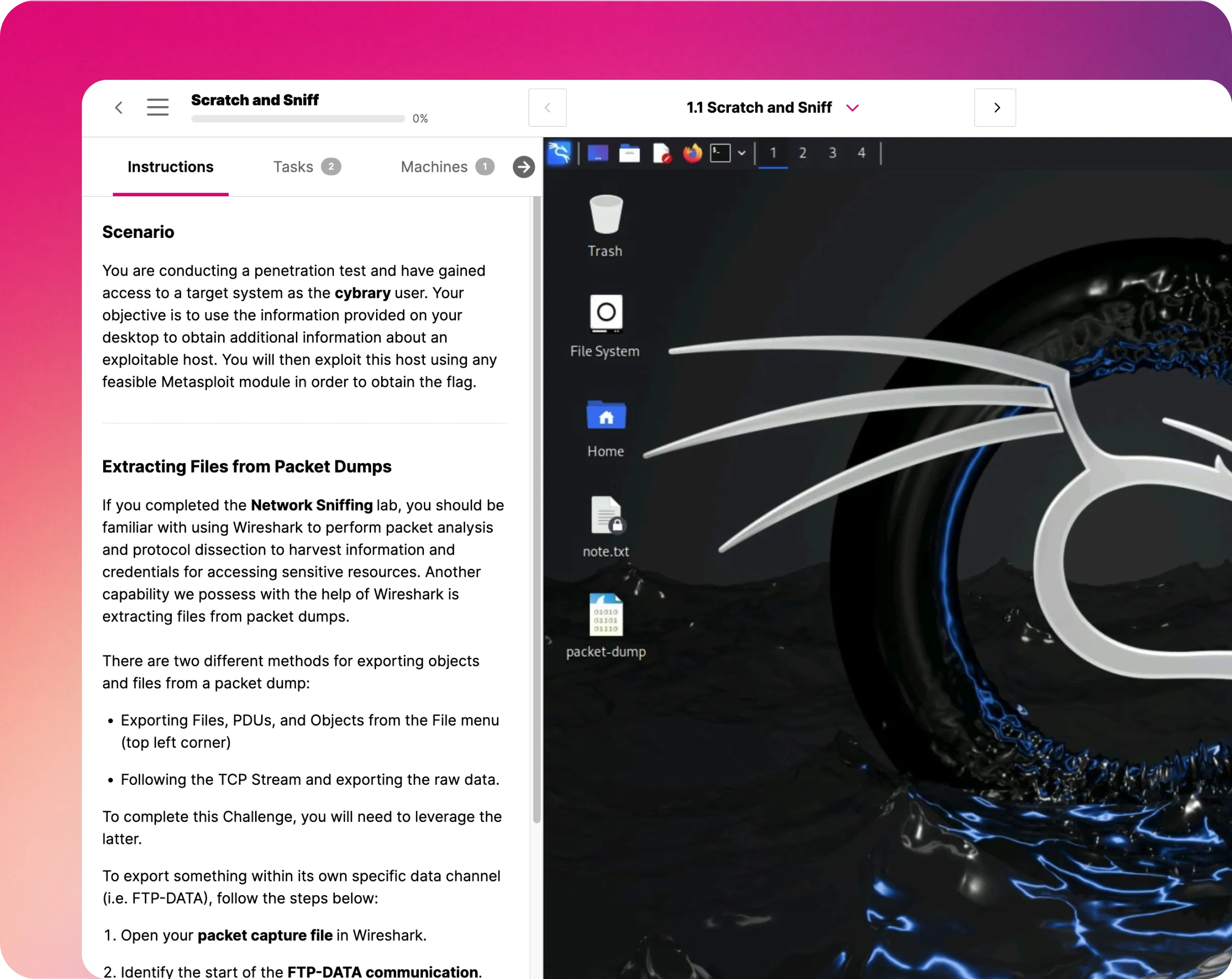
    Put your skills to the test in virtual labs, challenges, and simulated environments.

    Measure Your Progress

    Track your skills development from lesson to lesson using the Cybrary Skills Tracker.

    Connect with the Community

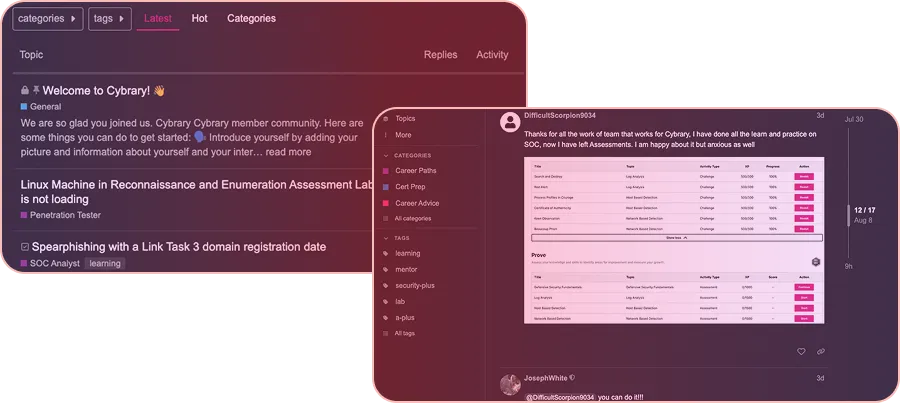
    Connect with peers and mentors through our supportive community of cybersecurity professionals.

    Success from Our Learners

    "Cybrary really helped me get up to speed and acquire a baseline level of technical knowledge. It offers a far more comprehensive approach than just learning from a book. It actually shows you how to apply cybersecurity processes in a hands-on way"

    Don Gates

    Principal Systems Engineer/SAIC

    "Cybrary’s SOC Analyst career path was the difference maker, and was instrumental in me landing my new job. I was able to show the employer that I had the right knowledge and the hands-on skills to execute the role."

    Cory

    Cybersecurity analyst/

    "I was able to earn my CISSP certification within 60 days of signing up for Cybrary Insider Pro and got hired as a Security Analyst conducting security assessments and penetration testing within 120 days. This certainly wouldn’t have been possible without the support of the Cybrary mentor community."

    Mike

    Security Engineer and Pentester/

    "Cybrary really helped me get up to speed and acquire a baseline level of technical knowledge. It offers a far more comprehensive approach than just learning from a book. It actually shows you how to apply cybersecurity processes in a hands-on way"

    Don Gates

    Principal Systems Engineer/SAIC

    "Cybrary’s SOC Analyst career path was the difference maker, and was instrumental in me landing my new job. I was able to show the employer that I had the right knowledge and the hands-on skills to execute the role."

    Cory

    Cybersecurity analyst/

    "I was able to earn my CISSP certification within 60 days of signing up for Cybrary Insider Pro and got hired as a Security Analyst conducting security assessments and penetration testing within 120 days. This certainly wouldn’t have been possible without the support of the Cybrary mentor community."

    Mike

    Security Engineer and Pentester/

    "Becoming a Cybrary Insider Pro was a total game changer. Cybrary was instrumental in helping me break into cybersecurity, despite having no prior IT experience or security-related degree. Their career paths gave me clear direction, the instructors had real-world experience, and the virtual labs let me gain hands-on skills I could confidently put on my resume and speak to in interviews."

    Cassandra

    Information Security Analyst/Cisco Systems

    "I was able to earn both my Security+ and CySA+ in two months. I give all the credit to Cybrary. I’m also proud to announce I recently accepted a job as a Cyber Systems Engineer at BDO... I always try to debunk the idea that you can't get a job without experience or a degree."

    Casey

    Cyber Systems Engineer/BDO

    "Cybrary has helped me improve my hands-on skills and pass my toughest certification exams, enabling me to achieve 13 advanced certifications and successfully launch my own business. I love the practice tests for certification exams, especially, and appreciate the wide-ranging training options that let me find the best fit for my goals"

    Angel

    Founder,/ IntellChromatics.

    Application of the MITRE ATT&CK Framework

    This MITRE ATT&CK training is designed to teach students how to apply the matrix to help mitigate current threats. Students will move through the 12 core areas of the framework to develop a thorough understanding of various access ATT&CK vectors.

    8
    29
    M
    Time
    beginner
    difficulty
    10
    ceu/cpe

    Course Content

    Course Description

    In this course we will move through the 14 areas of the MITRE Attack Framework and discuss how security professionals should use the matrix to assist them in overlaying solutions or controls to address current threats.

    The MITRE Attack Framework is a globally accessible knowledge base of tactics and techniques provided from real-world observations. Using the attack framework, a security consultant or blue team member can formulate a strategy for reducing risk in both the public and private sectors.

    Since the methods of attack change regularly, this course is going to focus on examples for several of the attack types in each section and applicable mitigation tactics. These principles can then be applied across the entire framework whether you are looking at adding a security solution to your current stack or are doing research on known attack vectors for academic purposes.

    Prerequisites

  • Basic cyber defense technical terminology understanding
  • Basic terminology in association with controls
  • Basic terminology in association with risk reduction
  • Course Goals

    By the end of the course, students should be able to understand how to defend against the adversarial tactics of:

  • Reconnaissance
  • Resource Development
  • Initial Access
  • Execution
  • Persistence
  • Privilege Escalation
  • Defense Evasion
  • Credential Access
  • Discovery
  • Lateral Movement
  • Collection
  • Command and Control
  • Exfiltration
  • Impact
  • What is the MITRE ATT&CK Framework?

    MITRE ATT&CK was created as a model used to document and track a variety of different techniques that attackers use during the phases of a cyberattack to break into an organization’s network and obtain sensitive data.

    ATT&CK is an acronym for Adversarial Tactics, Techniques, and Common Knowledge. Essentially, the framework is a matrix of those techniques sorted by different tactics. It includes different matrices for Windows, Mac, LINUX, and mobile systems. The framework is used by various IT professionals including red teamers, threat hunters, and defenders to help classify attacks and assess a company’s risk.

    MITRE ATT&CK was launched in 2013 and has since become one of the most respected and used resources in cybersecurity. It’s an essential tool for professionals in the IT industry to be familiar with ATT&CK.

    What is Involved in the MITRE ATT&CK Training?

    In this application of the MITRE ATTACK Training Course, students will learn how to use the framework to reduce security risks to their organizations. The course will focus on breaking down several types of attacks and learning methods and tactics to mitigate those threats. The current framework of ATT&CK includes 12 tactics, each of which has numerous techniques.

    When completed with this course, students will have the skills to understand primary access ATT&CK vectors, including:

  • Spear Phishing Link
  • Drive-by Compromise
  • Supply Chain Compromise
  • Trusted Relationship
  • Students who enroll in this MITRE ATTACK training should have an understanding of basic technical terminology, basic terminology in association with controls, and basic terminology in association with risk reduction. There are no other requirements for this beginner level course.

    In this course, students will earn 10 CEU/CPE and will receive a Mitre Att&ck Certificate of Completion when finished with the class.

    How is the MITRE ATT&CK Framework Used?

    The MITRE ATT&CK framework, a staple of the security community, works by organizing the steps that cyber attackers take to infiltrate networks, compromise hosts, escalate privileges, move without detection, and ultimately, obtain important data. Cybersecurity teams can better test, develop, and prioritize their current means of detection and response to be relevant to their organizations’ business, industry, and intellectual property.

    Why Is Understanding the MITRE ATT&CK Framework Important in IT?

    MITRE ATT&CK is a framework that has been around for a number of years, but it’s fairly recently that it’s become a universal tool. It’s important in the IT industry because it’s very effective at helping organizations, government agencies, and end users share cyberthreat intelligence. Of course, there are other means through which intelligence like this is shared, what sets ATT&CK apart is that it uses a common language that is standardized and accessible worldwide.

    Another benefit of using the ATT&CK framework is that it allows defenders and analysts to work together with information to compare and contrast different threat groups. Analysts are able to structure intelligence based on behavior ad defenders can structure information based on behavior. Together they are able to detect and mitigate threats.

    Additionally, users are able to understand adversaries and how they operate on a deeper level – the steps that they will use to infiltrate networks and obtain the data they are after. This means that defenders don’t necessarily have to focus only on defensive tactics, but also have to have a good understanding of how the offense is working. That will allow cybersecurity professionals to better defend their networks and systems.

    What Is the Best Way to Learn about MITRE ATT&CK Framework?

    The MITRE ATT&CK framework is an important and widely used tool for cybersecurity professionals. It’s a means for sharing intelligence with the goal of reducing the risk of cyberattacks for organizations. Learning about the ATT&CK framework is essential for IT and cybersecurity professionals to stay up to date in their industry and ahead of the bad guys.

    It’s best to learn about MITRE ATTACK from experts who use it, like Cybrary’s excellent instructors. All of the courses in our extensive library are self-paced, making them convenient for all students. If you’re interested in learning more about the MITRE ATT&CK framework, enrolling in our Application of the MITRE ATTACK Framework training is a great place to start. Enrolling is easy, just click the Register button at the top right of this screen to get started.

    This course is part of a Career Path:
    No items found.

    Instructed by

    Provider
    Cybrary Logo
    Certification Body
    Certificate of Completion

    Complete this entire course to earn a Application of the MITRE ATT&CK Framework Certificate of Completion