


.svg)








Getting Started in AI
In this practical course, you'll learn how to treat AI prompts and outputs like governed assets. Mitigate risks like prompt injection, protect sensitive data, and apply enterprise-grade controls to your workflow. Master the art of validating outputs and measuring cost/accuracy to scale AI safely. Secure your output. Protect your data.

2
H
15
M
Time
Intermediate
difficulty
2
ceu/cpe
Course Content
Course Description
AI risk is different from traditional IT risk because models can generate confident but false outputs, respond to adversarial prompts, and learn from context users provide. You will learn to treat prompts and outputs as governed artifacts with the same care you give to code or financial data.
Course Objectives
By the end of the course, you will be able to:
- Identify top enterprise risks in everyday AI use and map them to controls you can apply. Why it matters: clear risk awareness prevents data loss and reduces incident volume.
- Apply safe prompting and minimal data practices in your daily tools. Why it matters: you protect customer and company data while keeping productivity gains.
- Recognize prompt injection, indirect injection, insecure output handling, and overreliance. Why it matters: early detection lowers false actions and downstream damage.
- Use enterprise controls such as access, logging, and retention when working with AI assistants. Why it matters: good records and audit trails reduce MTTA and legal exposure.
- Validate AI outputs with sources and policies before you act. Why it matters: verified outputs improve accuracy and trust.
- Operate within privacy, compliance, and incident reporting requirements. Why it matters: alignment with governance avoids fines and reputational harm.
- Measure your AI use with practical metrics such as accuracy, latency budget, token cost, and auditability. Why it matters: measurement drives continuous improvement and safe scaling.
Provider

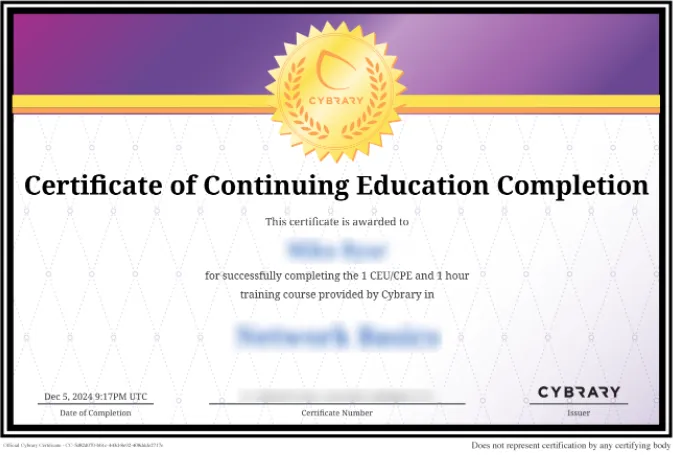
Certificate of Completion


