COURSE

Foundations of Physical Penetration Testing

Course

While organizations often focus on protecting digital assets, physical vulnerabilities can provide attackers with direct access to sensitive systems, data, and infrastructure. In this course, you'll learn the fundamentals of planning and conducting physical penetration tests, also known as physical pen testing, while discovering how these assessments help organizations uncover vulnerabilities before attackers do.

Full access included with 
Insider Pro
 and 
Teams

6

H

59

M
Time

Intermediate

i
Designed for learners who have no prior work experience in IT or Cybersecurity, but are interested in starting a career in this exciting field.
Designed for learners with prior cybersecurity work experience who are interested in advancing their career or expanding their skillset.
Designed for learners with a solid grasp of foundational IT and cybersecurity concepts who are interested in pursuing an entry-level security role.
Experience Level

796

Enrollees

5640

XP

7

i

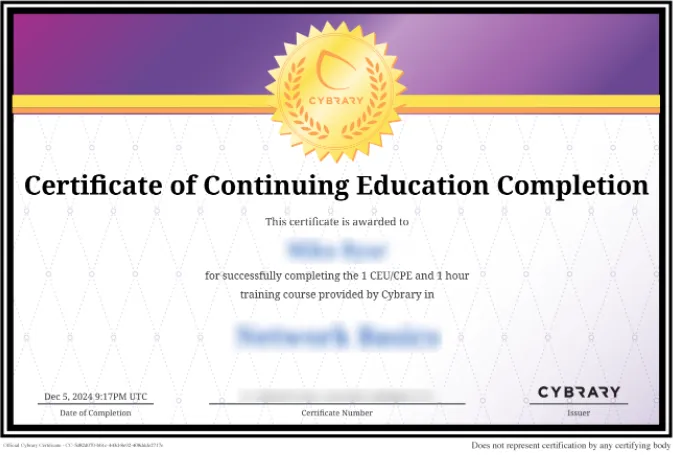
Earn qualifying credits for certification renewal with completion certificates provided for submission.
CEU's

Learners at 96% of Fortune 1000 companies trust Cybrary

About this course

Read More

Skills you'll gain

Course Outline

Module 1: Administrative Procedures
0
H
44
Min
1
Module 2: Planning and Coordination
1
H
3
Min
1
Module 3: Intelligence
1
H
8
Min
1
Module 4: Physical Vulnerability Assessments
0
H
50
Min
1
Module 5: Exploitation
2
H
34
Min
1
Module 6: Reporting Procedures
0
H
37
Min

1.1 Course Introduction

Free

20 XP

0H

3m

2.1 Creating a Detailed Plan

Free

200 XP

0H

10m

3.1 Intelligence Fundamentals

Free

200 XP

0H

9m

4.1 Planning and Contingencies

Free

200 XP

0H

23m

5.1 Planning and Contingencies

Free

200 XP

0H

14m

6.1 Confidentiality

Free

200 XP

0H

11m

1.2 Receiving a Contract

Free

200 XP

0H

16m

2.2 Assembling a Team

Free

200 XP

0H

4m

3.2 Intelligence Collection

Free

200 XP

0H

51m

4.2 Blending into your Environment

Free

200 XP

0H

8m

5.2 Equipment Familiarization

Free

200 XP

0H

37m

6.2 Formatting

Free

200 XP

0H

11m

1.3 Understanding Scope

Free

200 XP

0H

9m

2.3 Task Organization

Free

200 XP

0H

13m

3.3 Passive and Active Information Gathering

Free

200 XP

0H

2m

4.3 Integration with Technical Assets

Free

200 XP

0H

5m

5.3 Fundamentals of Operational Entry I – Locks and Doors

Free

200 XP

0H

52m

6.3 Integrated Reporting

Free

200 XP

0H

3m

1.4 Legal Understanding

Free

200 XP

0H

14m

2.4 Communications Plan

Free

200 XP

0H

14m

3.4 Integration with Technical Assets

Free

200 XP

0H

5m

4.4 Execution Overview

Free

200 XP

0H

9m

5.4 Fundamentals of Operational Entry II - Execution

Free

200 XP

0H

39m

6.4 Reporting Procedures

Free

200 XP

0H

11m

2.5 Organizing Information

Free

200 XP

0H

8m

4.5 Reporting Procedures

Free

200 XP

0H

4m

5.5 Integration with Technical Assets

Free

200 XP

0H

4m

2.6 Coordination with Adjacent Security Elements

Free

200 XP

0H

2m

5.6 Reporting Procedures

Free

200 XP

0H

6m

2.7 Briefing the Plan

Free

20 XP

0H

8m

Foundations of Physical PenTesting - 1.1 Course Introduction

3m

Module 1: Foundations Physical PenTesting - Administrative Procedures
Foundations of Physical PenTesting - 2.1 Creating a Detailed Plan

10m

Module 2: Foundations Physical PenTesting - Planning and Coordination
Foundations of Physical PenTesting - 3.1 Intelligence Fundamentals

9m

Module 3: Foundations Physical PenTesting - Intelligence
Foundations of Physical PenTesting - 4.1 Planning and Contingencies

23m

Module 4: Foundations Physical PenTesting - Physical Vulnerability Assessments
Foundations of Physical PenTesting - 5.1 Planning and Contingencies

14m

Module 5: Foundations Physical PenTesting - Exploitation
Foundations of Physical PenTesting - 6.1 Confidentiality

11m

Module 6: Foundations Physical PenTesting - Reporting Procedures
Foundations of Physical PenTesting - 1.2 Receiving a Contract

16m

Module 1: Foundations Physical PenTesting - Administrative Procedures
Foundations of Physical PenTesting - 2.2 Assembling a Team

4m

Module 2: Foundations Physical PenTesting - Planning and Coordination
Foundations of Physical PenTesting - 3.2 Intelligence Collection

51m

Module 3: Foundations Physical PenTesting - Intelligence
Foundations of Physical PenTesting - 4.2 Blending into your Environment

8m

Module 4: Foundations Physical PenTesting - Physical Vulnerability Assessments
Foundations of Physical PenTesting - 5.2 Equipment Familiarization

37m

Module 5: Foundations Physical PenTesting - Exploitation
Foundations of Physical PenTesting - 6.2 Formatting

11m

Module 6: Foundations Physical PenTesting - Reporting Procedures
Foundations of Physical PenTesting - 1.3 Understanding Scope

9m

Module 1: Foundations Physical PenTesting - Administrative Procedures
Foundations of Physical PenTesting - 2.3 Task Organization

13m

Module 2: Foundations Physical PenTesting - Planning and Coordination
Foundations of Physical PenTesting - 3.3 Passive and Active Information Gathering

2m

Module 3: Foundations Physical PenTesting - Intelligence
Foundations of Physical PenTesting - 4.3 Integration with Technical Assets

5m

Module 4: Foundations Physical PenTesting - Physical Vulnerability Assessments
Foundations of Physical PenTesting - 6.3 Integrated Reporting

3m

Module 6: Foundations Physical PenTesting - Reporting Procedures
Foundations of Physical PenTesting - 1.4 Legal Understanding

14m

Module 1: Foundations Physical PenTesting - Administrative Procedures
Foundations of Physical PenTesting - 2.4 Communications Plan

14m

Module 2: Foundations Physical PenTesting - Planning and Coordination
Foundations of Physical PenTesting - 3.4 Integration with Technical Assets

5m

Module 3: Foundations Physical PenTesting - Intelligence
Foundations of Physical PenTesting - 4.4 Execution Overview

9m

Module 4: Foundations Physical PenTesting - Physical Vulnerability Assessments
Foundations of Physical PenTesting - 6.4 Reporting Procedures

11m

Module 6: Foundations Physical PenTesting - Reporting Procedures
Foundations of Physical PenTesting - 2.5 Organizing Information

8m

Module 2: Foundations Physical PenTesting - Planning and Coordination
Course Description

Foundations of Physical Penetration Testing introduces the principles, methodologies, and ethical considerations behind physical security testing and assessing an organization's physical security posture. You'll explore how physical penetration tests are planned, executed, and documented while gaining an understanding of common weaknesses found in offices, data centers, and other facilities.

Through practical examples and real-world scenarios, you'll examine reconnaissance techniques, access control assessments, social engineering considerations, lock and entry concepts, and facility security evaluations - the core disciplines of physical pentesting. By the end of the course, you'll understand how physical penetration testing complements traditional cybersecurity assessments and helps organizations identify risks before malicious actors can exploit them.

Train Your Team

Cybrary’s expert-led cybersecurity courses help your team remediate skill gaps and get up-to-date on certifications. Utilize Cybrary to stay ahead of emerging threats and provide team members with clarity on how to learn, grow, and advance their careers within your organization.

Included in a Path

No items found.
No items found.

Instructors

Brett Rookstool
Senior Instructor Writer for Army Special Operations
Read Full Bio

Frequently Asked Questions

Who is this course for?

This course is designed for penetration testers, red team members, physical security specialists, and IT professionals interested in understanding how physical security assessments contribute to an organization's overall security program. It's also valuable for security leaders looking to better understand physical risk management.

Why should I complete this course?

Cybersecurity doesn't stop at the network perimeter. Physical security weaknesses can undermine even the strongest technical controls, making physical penetration testing an essential part of a comprehensive security strategy. Completing this course will help you understand how physical assessments are conducted, how vulnerabilities are identified responsibly, and how organizations can strengthen their defenses against real-world threats.

What skills does this course develop?

By the end of this course, you should be able to:

  • Contribute to the administrative duties of a physical penetration testing team
  • Plan and coordinate the process of a physical penetration test
  • Educate adjacent cybersecurity entities on the types of information valuable to a physical penetration testing team
  • Integrate a physical penetration test with adjacent cybersecurity entities
  • Convey familiarity with the operational entry process
  • Provide students with the foundation to further develop their penetration testing skills and become subject-matter experts
Learn

Learn core concepts and get hands-on with key skills.

Practice

Exercise your problem-solving and creative thinking skills with security-centric puzzles

Prove

Assess your knowledge and skills to identify areas for improvement and measure your growth

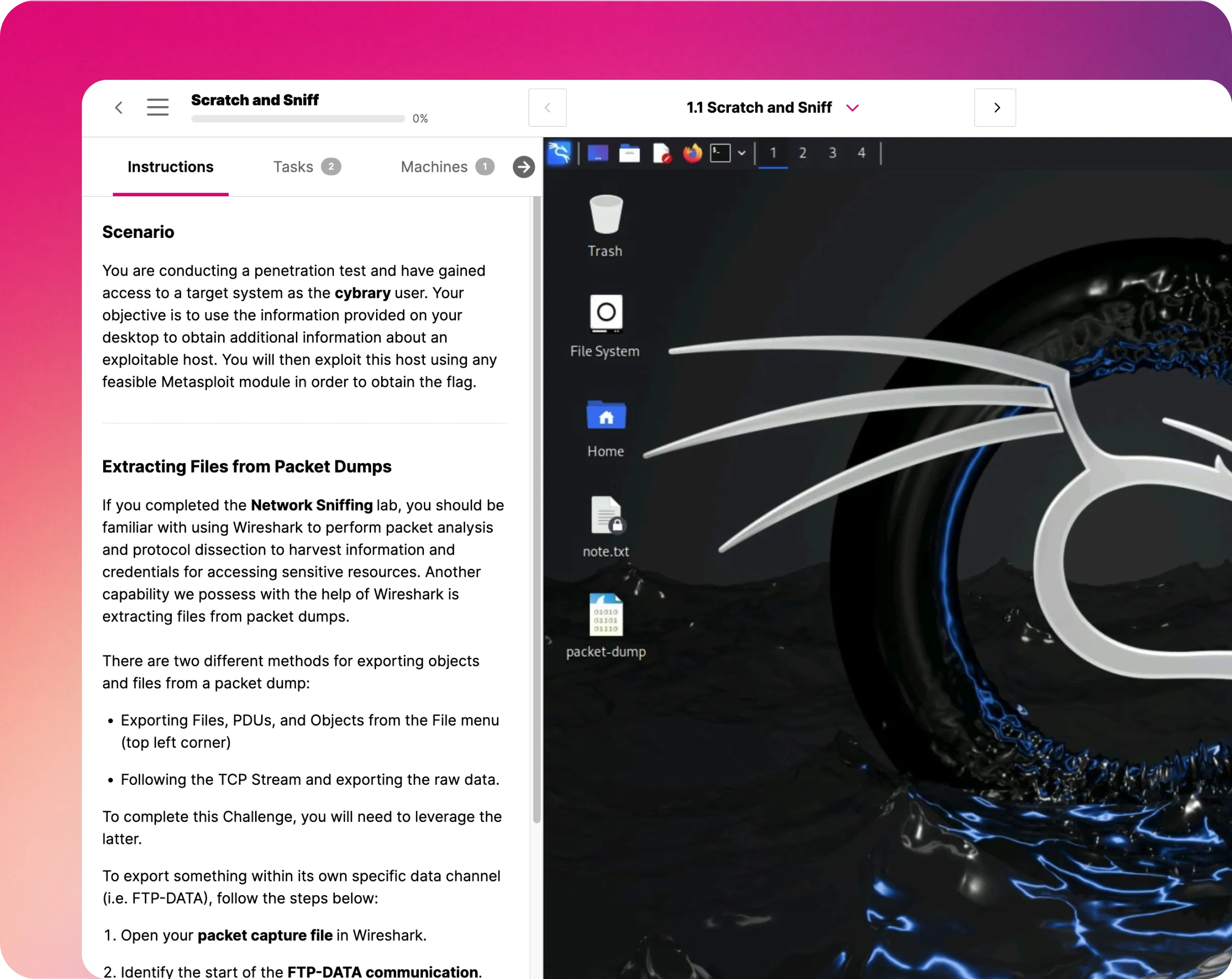
Get Hands-on Learning

Put your skills to the test in virtual labs, challenges, and simulated environments.

Measure Your Progress

Track your skills development from lesson to lesson using the Cybrary Skills Tracker.

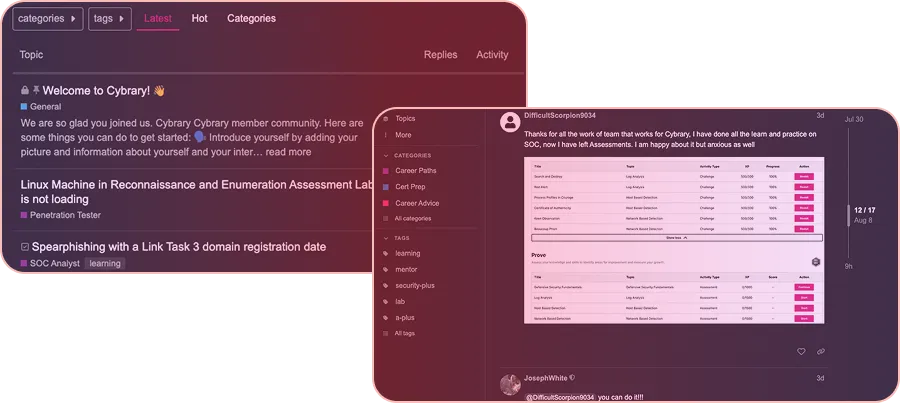
Connect with the Community

Connect with peers and mentors through our supportive community of cybersecurity professionals.

Success from Our Learners

"Becoming a Cybrary Insider Pro was a total game changer. Cybrary was instrumental in helping me break into cybersecurity, despite having no prior IT experience or security-related degree. Their career paths gave me clear direction, the instructors had real-world experience, and the virtual labs let me gain hands-on skills I could confidently put on my resume and speak to in interviews."

Cassandra

Information Security Analyst/Cisco Systems

"I was able to earn both my Security+ and CySA+ in two months. I give all the credit to Cybrary. I’m also proud to announce I recently accepted a job as a Cyber Systems Engineer at BDO... I always try to debunk the idea that you can't get a job without experience or a degree."

Casey

Cyber Systems Engineer/BDO

"Cybrary has helped me improve my hands-on skills and pass my toughest certification exams, enabling me to achieve 13 advanced certifications and successfully launch my own business. I love the practice tests for certification exams, especially, and appreciate the wide-ranging training options that let me find the best fit for my goals"

Angel

Founder,/ IntellChromatics.

"Cybrary really helped me get up to speed and acquire a baseline level of technical knowledge. It offers a far more comprehensive approach than just learning from a book. It actually shows you how to apply cybersecurity processes in a hands-on way"

Don Gates

Principal Systems Engineer/SAIC

"Cybrary’s SOC Analyst career path was the difference maker, and was instrumental in me landing my new job. I was able to show the employer that I had the right knowledge and the hands-on skills to execute the role."

Cory

Cybersecurity analyst/

"I was able to earn my CISSP certification within 60 days of signing up for Cybrary Insider Pro and got hired as a Security Analyst conducting security assessments and penetration testing within 120 days. This certainly wouldn’t have been possible without the support of the Cybrary mentor community."

Mike

Security Engineer and Pentester/

"Becoming a Cybrary Insider Pro was a total game changer. Cybrary was instrumental in helping me break into cybersecurity, despite having no prior IT experience or security-related degree. Their career paths gave me clear direction, the instructors had real-world experience, and the virtual labs let me gain hands-on skills I could confidently put on my resume and speak to in interviews."

Cassandra

Information Security Analyst/Cisco Systems

"I was able to earn both my Security+ and CySA+ in two months. I give all the credit to Cybrary. I’m also proud to announce I recently accepted a job as a Cyber Systems Engineer at BDO... I always try to debunk the idea that you can't get a job without experience or a degree."

Casey

Cyber Systems Engineer/BDO

"Cybrary has helped me improve my hands-on skills and pass my toughest certification exams, enabling me to achieve 13 advanced certifications and successfully launch my own business. I love the practice tests for certification exams, especially, and appreciate the wide-ranging training options that let me find the best fit for my goals"

Angel

Founder,/ IntellChromatics.

Expand your penetration testing expertise beyond the digital world. Enroll in Cybrary's Foundations of Physical Penetration Testing course to learn how to identify physical security vulnerabilities, conduct ethical assessments, and help organizations build stronger, more resilient security programs.

Foundations of Physical Penetration Testing

While organizations often focus on protecting digital assets, physical vulnerabilities can provide attackers with direct access to sensitive systems, data, and infrastructure. In this course, you'll learn the fundamentals of planning and conducting physical penetration tests, also known as physical pen testing, while discovering how these assessments help organizations uncover vulnerabilities before attackers do.

6
59
M
Time
Intermediate
difficulty
7
ceu/cpe

Course Content

Course Description

Foundations of Physical Penetration Testing introduces the principles, methodologies, and ethical considerations behind physical security testing and assessing an organization's physical security posture. You'll explore how physical penetration tests are planned, executed, and documented while gaining an understanding of common weaknesses found in offices, data centers, and other facilities.

Through practical examples and real-world scenarios, you'll examine reconnaissance techniques, access control assessments, social engineering considerations, lock and entry concepts, and facility security evaluations - the core disciplines of physical pentesting. By the end of the course, you'll understand how physical penetration testing complements traditional cybersecurity assessments and helps organizations identify risks before malicious actors can exploit them.

This course is part of a Career Path:
No items found.

Instructed by

Provider
Cybrary Logo
Certification Body
Certificate of Completion

Complete this entire course to earn a Foundations of Physical Penetration Testing Certificate of Completion