COURSE

AI for security engineers

Course

The course links risk frameworks to SOC and engineering practices. You will turn policies into guardrails, detection content, and SLOs; and build with the platforms your teams run daily and prove effectiveness with measurable improvements in MTTA, MTTR, accuracy, and cost.

Full access included with 
Insider Pro
 and 
Teams

2

H

21

M
Time

Advanced

i
Designed for learners who have no prior work experience in IT or Cybersecurity, but are interested in starting a career in this exciting field.
Designed for learners with prior cybersecurity work experience who are interested in advancing their career or expanding their skillset.
Designed for learners with a solid grasp of foundational IT and cybersecurity concepts who are interested in pursuing an entry-level security role.
Experience Level

40

Enrollees

2190

XP

2

i

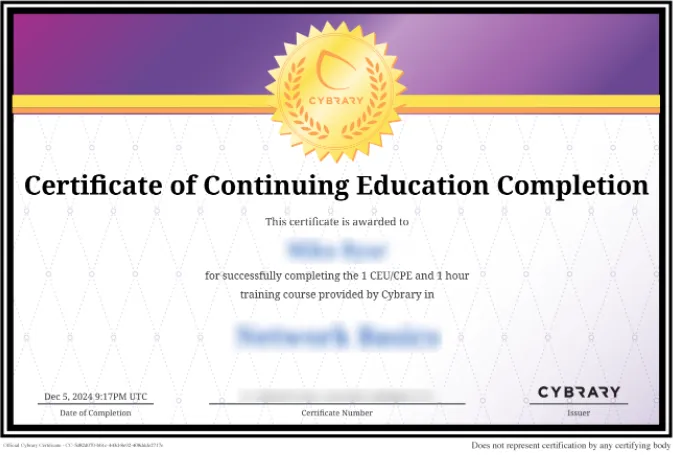
Earn qualifying credits for certification renewal with completion certificates provided for submission.
CEU's

Learners at 96% of Fortune 1000 companies trust Cybrary

About this course

Read More

Skills you'll gain

Course Outline

1
Module 1: AI for Security Engineers
2
H
21
Min

1.1 Course Overview

Free

30 XP

H

5m

1.2 Foundations of AI Security Engineering

Free

300 XP

H

15m

1.3 Data, Grounding, and Retrieval Patterns

Free

300 XP

H

26m

1.4 Prompt, Policy, and Guardrails

Free

300 XP

H

15m

1.5 Threat Modeling with MITRE ATLAS and OWASP LLM Top 10

Free

300 XP

H

15m

1.6 Building Sidecar Assistants in the SOC

Free

300 XP

H

15m

1.7 Detection Engineering with AI on Splunk and Elastic

Free

300 XP

H

15m

1.8 Cloud Controls on Microsoft and Google

Free

300 XP

H

15m

1.9 Operate, Measure, and Respond

Free

30 XP

H

15m

1.10 Course Conclusion and Next Steps

Free

30 XP

H

5m

1.1 Course Overview

5m

Module 1: AI for Security Engineers
1.2 Foundations of AI Security Engineering

15m

Module 1: AI for Security Engineers
1.3 Data, Grounding, and Retrieval Patterns

26m

Module 1: AI for Security Engineers
1.4 Prompt, Policy, and Guardrails

15m

Module 1: AI for Security Engineers
1.6 Building Sidecar Assistants in the SOC

15m

Module 1: AI for Security Engineers
1.8 Cloud Controls on Microsoft and Google

15m

Module 1: AI for Security Engineers
1.9 Operate, Measure, and Respond

15m

Module 1: AI for Security Engineers
1.10 Course Conclusion and Next Steps

5m

Module 1: AI for Security Engineers
Course Description

AI risk differs from traditional IT risk because model behavior is probabilistic, highly sensitive to inputs, and dependent on training data and prompts. This demands controls that address data provenance, grounding, content policy, and continuous validation, not only perimeter security.

You will use NIST AI RMF to structure governance across Map, Measure, Manage, and Govern functions. CISA Secure by Design guides how you set secure defaults, limit attack surface, and log meaningfully. MITRE ATLAS provides adversary behaviors for AI-enabled systems so you can threat model realistically. OWASP LLM Top 10 frames misuse and design weaknesses such as prompt injection, data exfiltration, and insecure function calling.

The course links risk frameworks to SOC and engineering practices. You will turn policies into guardrails, detection content, and SLOs. You will build with the platforms your teams run daily and prove effectiveness with measurable improvements in MTTA, MTTR, accuracy, and cost.

Course Objectives

By the end of this course, you will be able to:

  • Map SOC use cases to deployable AI patterns. You will be able to identify safe, high-value use cases and choose patterns such as retrieval augmented generation, sidecar assistants, and automation gates. Why it matters: You prioritize projects with the highest risk reduction and fastest cycle time.
  • Design secure AI workflows with guardrails and policy enforcement. You will be able to implement content filters, data controls, grounding, and policy checks with full logging. *Why it matters: *You reduce prompt injection, data leakage, and overreliance risk.
  • Implement platform-specific integrations on Microsoft, Google, Splunk, and Elastic. You will be able to connect AI components to your existing telemetry, identity, and workflow tools. Why it matters: You deliver value with systems your enterprise already uses.
  • Apply NIST AI RMF, CISA Secure by Design, MITRE ATLAS, and OWASP LLM Top 10 to deployments. You will be able to map threats and controls to concrete build and run tasks. *Why it matters: *You align engineering choices to recognized controls and threat models.
  • Validate AI outputs with automated tests and red teaming. You will be able to write assertions, build regression suites, and exercise adversarial prompts. Why it matters: You prevent regressions and keep trust in production.
  • Instrument AI systems for auditability, performance, and cost with clear SLOs. You will be able to track accuracy, MTTA, MTTR, token cost, and data egress against budgets. Why it matters: You keep operations stable and predictable at scale.
  • Operationalize change management and incident response for AI components. You will be able to handle model, prompt, and policy changes with rollbacks and runbooks. Why it matters: You minimize downtime and MTTR when models or prompts drift.

Train Your Team

Cybrary’s expert-led cybersecurity courses help your team remediate skill gaps and get up-to-date on certifications. Utilize Cybrary to stay ahead of emerging threats and provide team members with clarity on how to learn, grow, and advance their careers within your organization.

Included in a Path

No items found.
No items found.

Instructors

No items found.
Learn

Learn core concepts and get hands-on with key skills.

Practice

Exercise your problem-solving and creative thinking skills with security-centric puzzles

Prove

Assess your knowledge and skills to identify areas for improvement and measure your growth

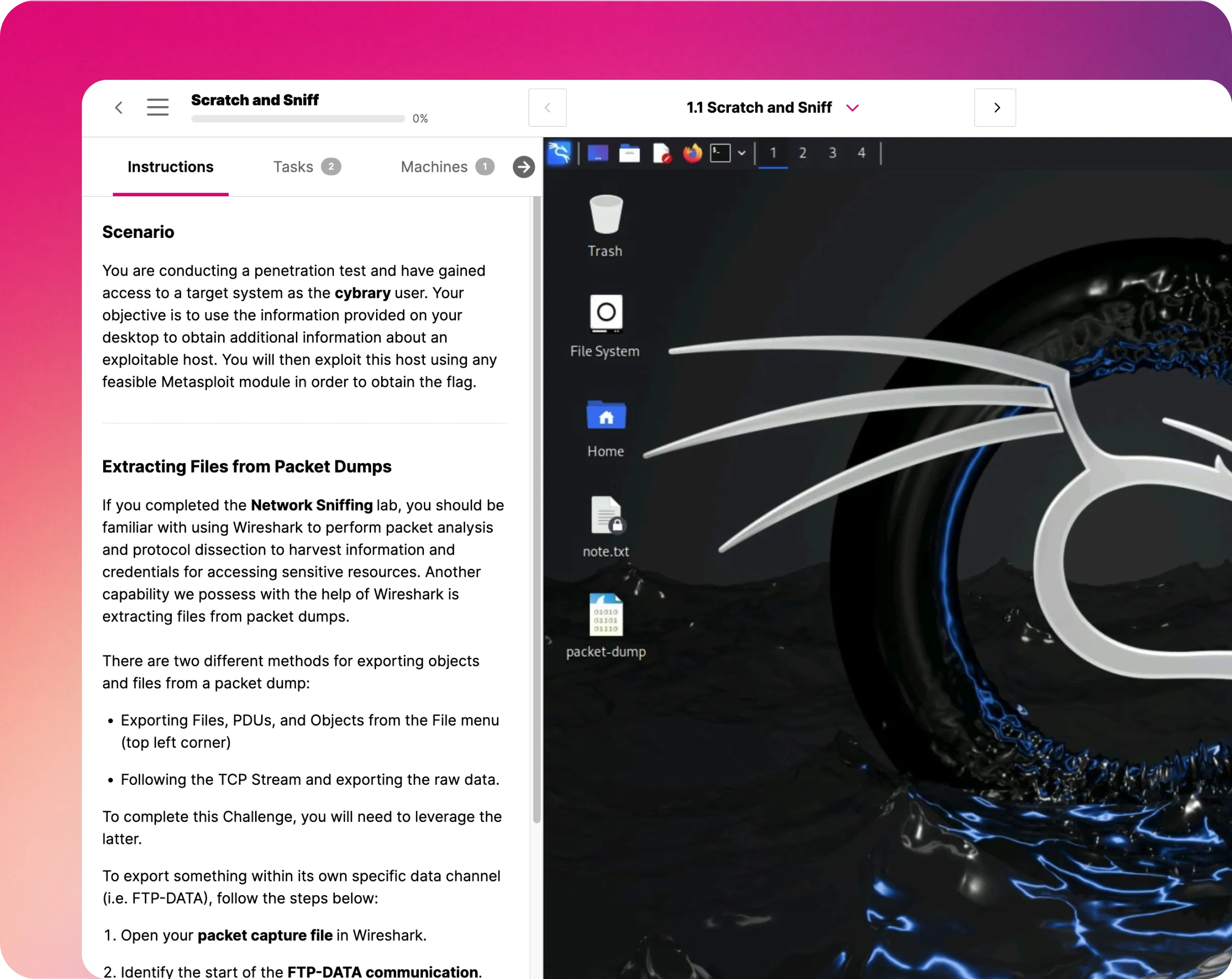
Get Hands-on Learning

Put your skills to the test in virtual labs, challenges, and simulated environments.

Measure Your Progress

Track your skills development from lesson to lesson using the Cybrary Skills Tracker.

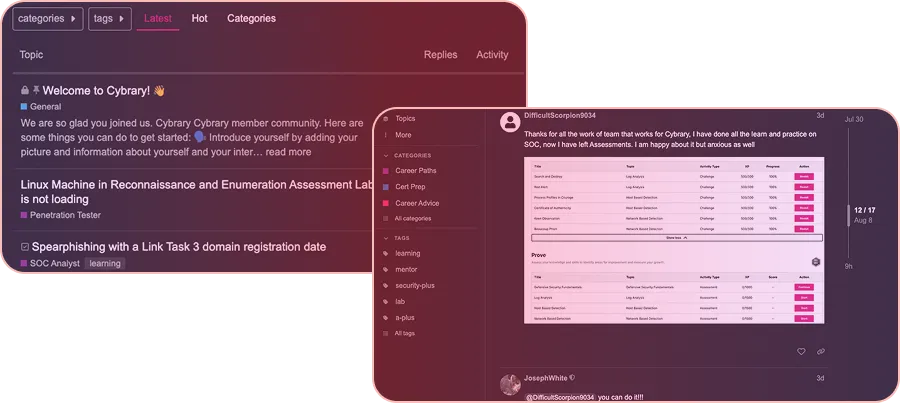
Connect with the Community

Connect with peers and mentors through our supportive community of cybersecurity professionals.

Success from Our Learners

"Cybrary really helped me get up to speed and acquire a baseline level of technical knowledge. It offers a far more comprehensive approach than just learning from a book. It actually shows you how to apply cybersecurity processes in a hands-on way"

Don Gates

Principal Systems Engineer/SAIC

"Cybrary’s SOC Analyst career path was the difference maker, and was instrumental in me landing my new job. I was able to show the employer that I had the right knowledge and the hands-on skills to execute the role."

Cory

Cybersecurity analyst/

"I was able to earn my CISSP certification within 60 days of signing up for Cybrary Insider Pro and got hired as a Security Analyst conducting security assessments and penetration testing within 120 days. This certainly wouldn’t have been possible without the support of the Cybrary mentor community."

Mike

Security Engineer and Pentester/

"Cybrary really helped me get up to speed and acquire a baseline level of technical knowledge. It offers a far more comprehensive approach than just learning from a book. It actually shows you how to apply cybersecurity processes in a hands-on way"

Don Gates

Principal Systems Engineer/SAIC

"Cybrary’s SOC Analyst career path was the difference maker, and was instrumental in me landing my new job. I was able to show the employer that I had the right knowledge and the hands-on skills to execute the role."

Cory

Cybersecurity analyst/

"I was able to earn my CISSP certification within 60 days of signing up for Cybrary Insider Pro and got hired as a Security Analyst conducting security assessments and penetration testing within 120 days. This certainly wouldn’t have been possible without the support of the Cybrary mentor community."

Mike

Security Engineer and Pentester/

"Becoming a Cybrary Insider Pro was a total game changer. Cybrary was instrumental in helping me break into cybersecurity, despite having no prior IT experience or security-related degree. Their career paths gave me clear direction, the instructors had real-world experience, and the virtual labs let me gain hands-on skills I could confidently put on my resume and speak to in interviews."

Cassandra

Information Security Analyst/Cisco Systems

"I was able to earn both my Security+ and CySA+ in two months. I give all the credit to Cybrary. I’m also proud to announce I recently accepted a job as a Cyber Systems Engineer at BDO... I always try to debunk the idea that you can't get a job without experience or a degree."

Casey

Cyber Systems Engineer/BDO

"Cybrary has helped me improve my hands-on skills and pass my toughest certification exams, enabling me to achieve 13 advanced certifications and successfully launch my own business. I love the practice tests for certification exams, especially, and appreciate the wide-ranging training options that let me find the best fit for my goals"

Angel

Founder,/ IntellChromatics.

AI for security engineers

The course links risk frameworks to SOC and engineering practices. You will turn policies into guardrails, detection content, and SLOs; and build with the platforms your teams run daily and prove effectiveness with measurable improvements in MTTA, MTTR, accuracy, and cost.

2
21
M
Time
Advanced
difficulty
2
ceu/cpe

Course Content

Course Description

AI risk differs from traditional IT risk because model behavior is probabilistic, highly sensitive to inputs, and dependent on training data and prompts. This demands controls that address data provenance, grounding, content policy, and continuous validation, not only perimeter security.

You will use NIST AI RMF to structure governance across Map, Measure, Manage, and Govern functions. CISA Secure by Design guides how you set secure defaults, limit attack surface, and log meaningfully. MITRE ATLAS provides adversary behaviors for AI-enabled systems so you can threat model realistically. OWASP LLM Top 10 frames misuse and design weaknesses such as prompt injection, data exfiltration, and insecure function calling.

The course links risk frameworks to SOC and engineering practices. You will turn policies into guardrails, detection content, and SLOs. You will build with the platforms your teams run daily and prove effectiveness with measurable improvements in MTTA, MTTR, accuracy, and cost.

Course Objectives

By the end of this course, you will be able to:

  • Map SOC use cases to deployable AI patterns. You will be able to identify safe, high-value use cases and choose patterns such as retrieval augmented generation, sidecar assistants, and automation gates. Why it matters: You prioritize projects with the highest risk reduction and fastest cycle time.
  • Design secure AI workflows with guardrails and policy enforcement. You will be able to implement content filters, data controls, grounding, and policy checks with full logging. *Why it matters: *You reduce prompt injection, data leakage, and overreliance risk.
  • Implement platform-specific integrations on Microsoft, Google, Splunk, and Elastic. You will be able to connect AI components to your existing telemetry, identity, and workflow tools. Why it matters: You deliver value with systems your enterprise already uses.
  • Apply NIST AI RMF, CISA Secure by Design, MITRE ATLAS, and OWASP LLM Top 10 to deployments. You will be able to map threats and controls to concrete build and run tasks. *Why it matters: *You align engineering choices to recognized controls and threat models.
  • Validate AI outputs with automated tests and red teaming. You will be able to write assertions, build regression suites, and exercise adversarial prompts. Why it matters: You prevent regressions and keep trust in production.
  • Instrument AI systems for auditability, performance, and cost with clear SLOs. You will be able to track accuracy, MTTA, MTTR, token cost, and data egress against budgets. Why it matters: You keep operations stable and predictable at scale.
  • Operationalize change management and incident response for AI components. You will be able to handle model, prompt, and policy changes with rollbacks and runbooks. Why it matters: You minimize downtime and MTTR when models or prompts drift.
This course is part of a Career Path:
No items found.

Instructed by

Provider
Cybrary Logo
Certification Body
Certificate of Completion

Complete this entire course to earn a AI for security engineers Certificate of Completion